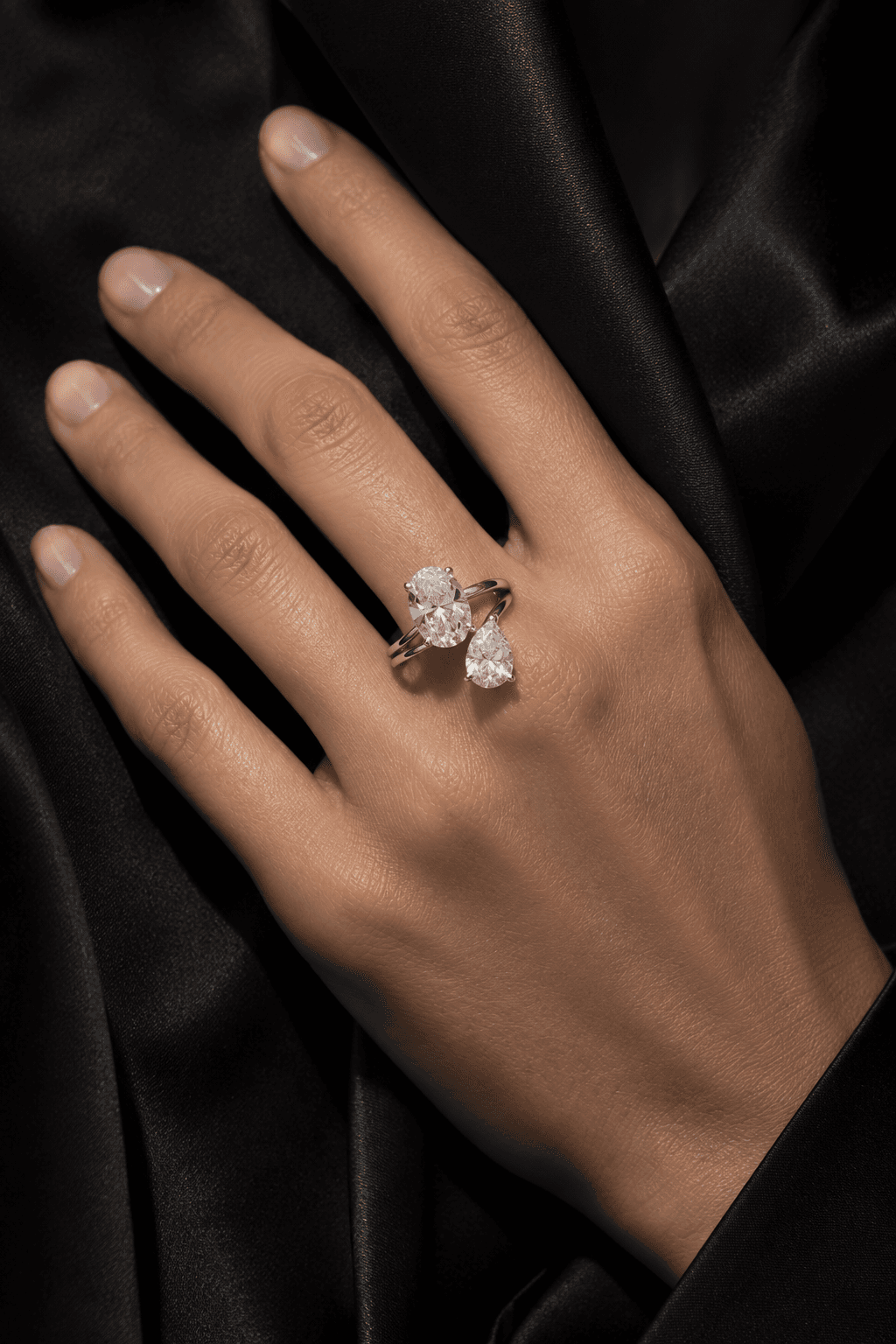
First, decide how it should feel
Classic is a mood.
So is bold.
Do not start with a grading report. Start with the wearer. Is the ring meant to disappear into a daily uniform, flash across a room, feel graceful and elongated, or look almost architectural? The answer narrows every later choice.
01 · The essential solitaire
The essential solitaire
One remarkable center stone, an intentional band, and nothing to distract from the silhouette. The right choice when the diamond and its proportions are the statement.
02 · The hidden detail
The hidden detail
A classic face with a private point of view: a hidden halo, a sculpted gallery, an engraved bridge, a surprise accent, or a band that reveals its character from the side.
03 · The architectural ring
The architectural ring
Clean geometry, step-cut diamonds, compass settings, split shanks, and strong lines. These designs feel polished, modern, and visually precise.
04 · The unmistakable ring
The unmistakable ring
A substantial center stone, an elongated shape, dramatic side stones, or a wide, diamond-rich shank. Scale is a design choice—make it on purpose.
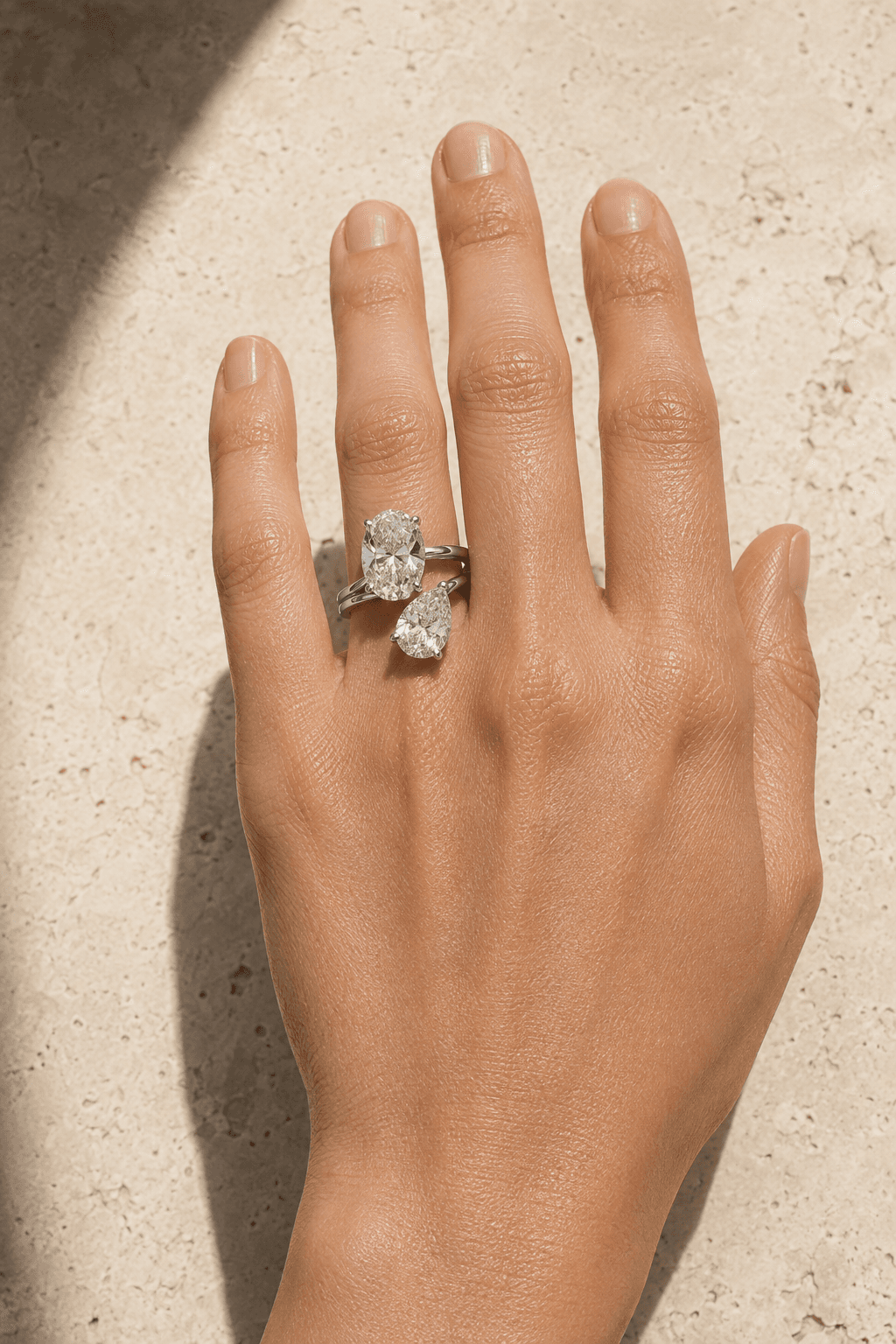
“The most memorable rings are not chosen by a checklist. They have a point of view.”
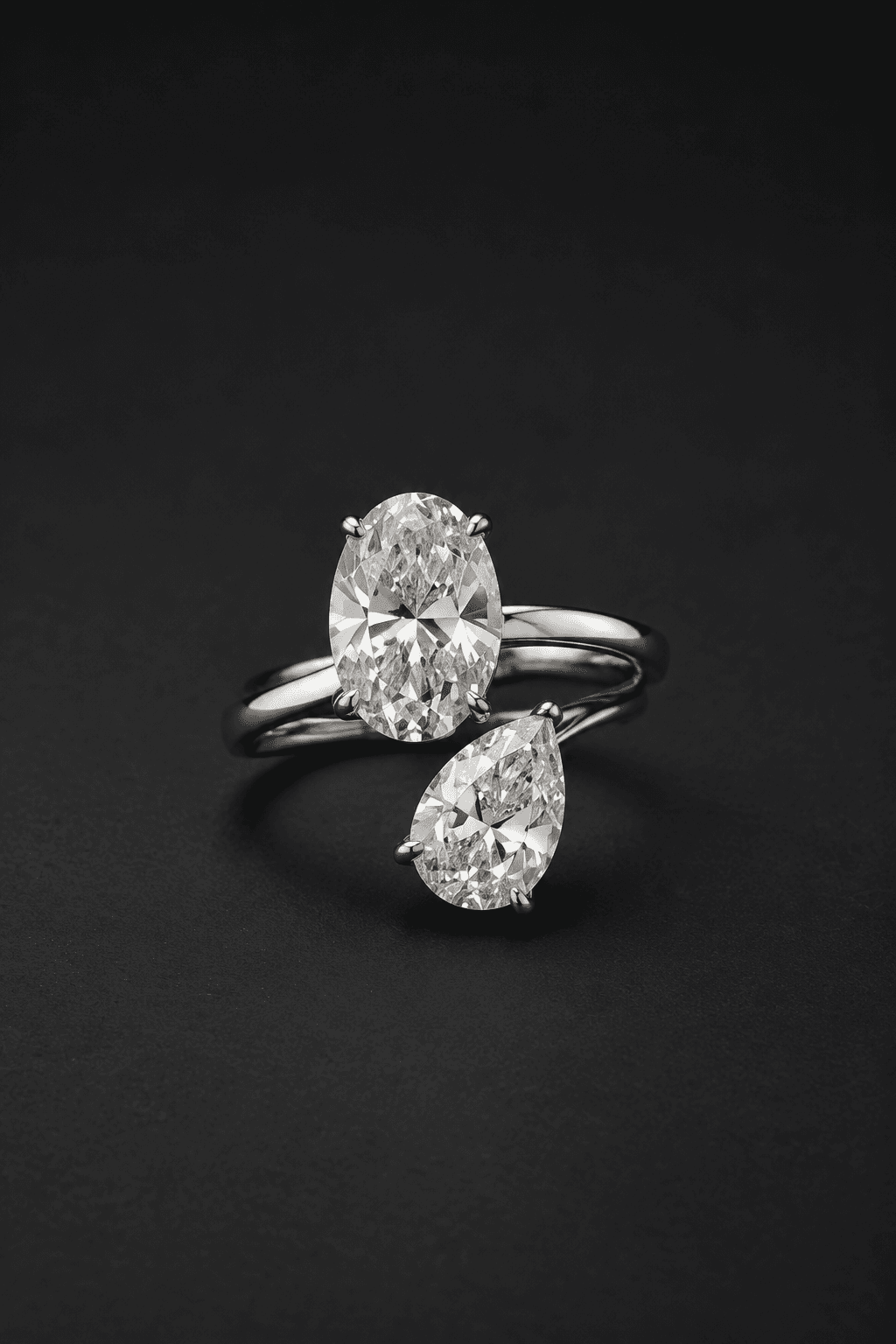
Center stone
Choose the outline
before the number.
Round brilliant is pure light and enduring proportion. Oval, pear, marquise, and elongated cushion shapes create length across the finger. Emerald and Asscher cuts are quieter but more architectural, rewarding crisp color and clarity. A stone's face-up dimensions tell you more about its visual presence than carat weight alone.
Read the diamond guide →Setting and proportion
The frame changes everything.
Solitaire
Lets the center stone lead. The band width and setting height are the two details that determine whether it reads delicate, confident, or dramatic.
Cathedral
Shoulders rise to meet the center stone, creating height and a classic profile without adding visual noise.
Three-stone
Side stones add narrative, width, and light. Choose them to echo the center or use contrast for a more collected feeling.
Halo or hidden halo
A halo expands the visual footprint. A hidden halo keeps the face cleaner while giving the ring a private layer of brilliance.
Metal is the atmosphere
Choose the color the ring lives in.
White gold and platinum make a diamond read crisp and bright. Yellow gold creates contrast and warmth; rose gold feels softer and more romantic. For the most intentional result, choose metal with the wearer's everyday jewelry in mind rather than treating it as a last-minute selection. Celestra offers 14k and 18k yellow, rose, and white gold, plus platinum.
Bring this to your consultation
Your five-detail brief
- Three images you love—and one you do not.
- The center-stone shape that keeps drawing you back.
- The desired scale: understated, substantial, or impossible to miss.
- Your preferred metal and the jewelry worn every day.
- A comfortable investment range. A clear range lets us design intelligently from the first estimate.
Ready when you are
Let's turn the
feeling into a ring.
Send a few references or simply tell us what caught your attention. We will return with a complimentary, thoughtful estimate and a clear next step—no pressure attached.
Start a free estimate